LIVING LAB N°29
Office building of Lurederra, Spain
IDENTITY CARD
Building type:
Location:
Year of construction:
Number of occupants:
Energy consuption:
Products interested in:
Products confirmed:
Quantity:
Office building
Los Arcos (Navarre), Spain
2010
14
-
Tecnan’s functional coating
Tecnan’s energy efficient glazing
Tecnan’s functional coating
Tecnan’s energy efficient glazing
-
MOTIVATION FOR PRODUCT TESTING
Assessment of two different coatings on indoor environmental quality, complimentary to the results measured within PM&VL2, PM&VL6 and PM&VL8.
Product description
Tecan's advanced functional coatings is a hydrophobic and photocatalytic coating that can reduce pollutants and improve indoor and outdoor air quality due to their self-cleaning, hydrophobic and photocatalytic properties.
Tecan's advanced nanomaterials for energy efficient glazing system is a nanotechnology-based heat barrier treatment for glass surfaces, which blocks infrared solar radiation (IR) by more than 40%.
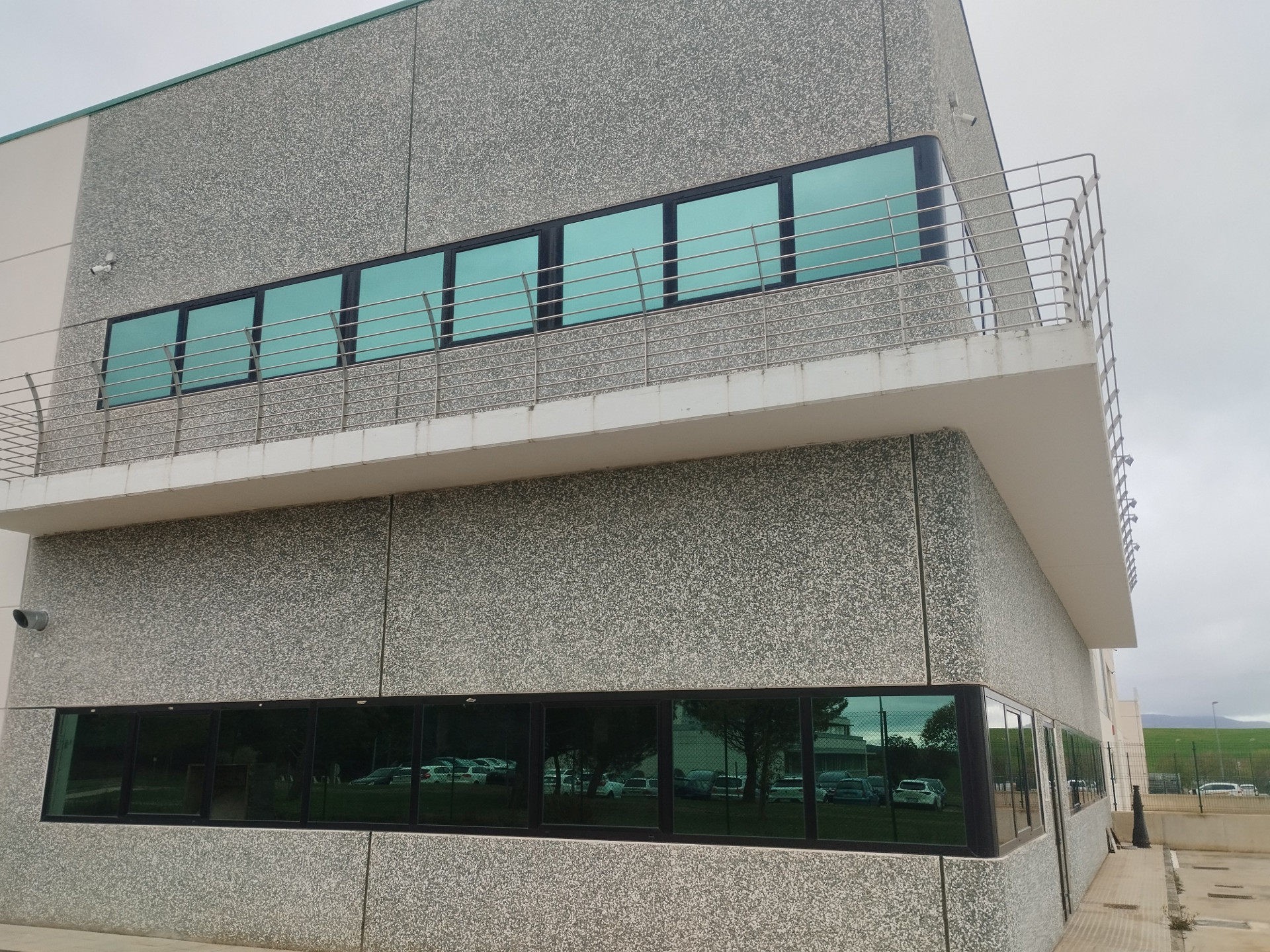
Building description
Product description
Tecan's advanced functional coatings is a hydrophobic and photocatalytic coating that can reduce pollutants and improve indoor and outdoor air quality due to their self-cleaning, hydrophobic and photocatalytic properties.
Tecan's advanced nanomaterials for energy efficient glazing system is a nanotechnology-based heat barrier treatment for glass surfaces, which blocks infrared solar radiation (IR) by more than 40%.
Climate
The climate of Los Arcos is Mediterranean-continental where rainfall is moderate (448-600 mm), falling over 60-80 days. Summers are warm and dry, and winters are cold and not very humid. The average annual temperature ranges from 10 °C to 13 °C, depending on the altitude and potential evapotranspiration, from 650 to 725 mm. The frost-free period begins on April 2 and ends on November 22. Los Arcos is located entirely in the temperate or southern zone of Navarre, but the influence of the San Gregorio mountain range and even Monjardín and Montejurra mountains is felt and exerts natural consequences on the climate during winter, making it noticeably more severe. In short, Los Arcos has a predominantly dry and sunny climate. In summer, temperatures range between 34 °C and 40 °C, and in winter, they can drop to between -3 °C and -7 °C.
Internal climate
The building is controlled by cool beams and the only issues seems to have too much dry air on winter.
Renovation plan
The exterior glass façade will be changed with new façade with retroreflective shading being integrated in the glass panels.
Monitoring Plan
Thermal comfort parameters:
IAQ study:
Acoustic study:
Post-occupancy evaluation:
Envelope performance:
Indoor air temperature, relative humidity
CO2, PM2.5, PM10, formaldehyde, TVOC
-
Basic “one-off questionnaire” on the user-satisfaction with the overall indoor environmental quality
Heat flux, surface and ambient temperature
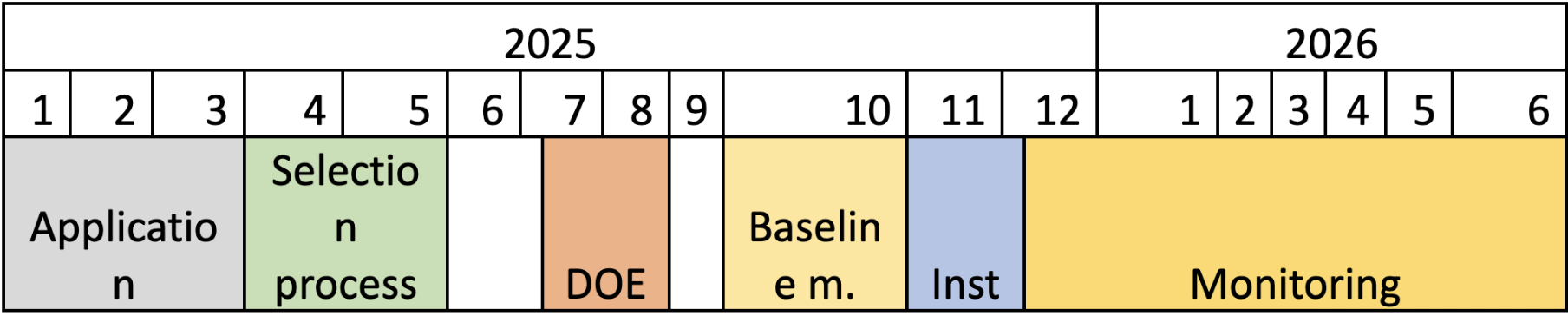
Timeline
Actions
Baseline measurements were performed between October 2025 and mid November 2025.
Coatings were applied in second half of November 2025.
Monitoring after the renovation was ongoing since December 2025. POE was done in March 2026 and August 2026.
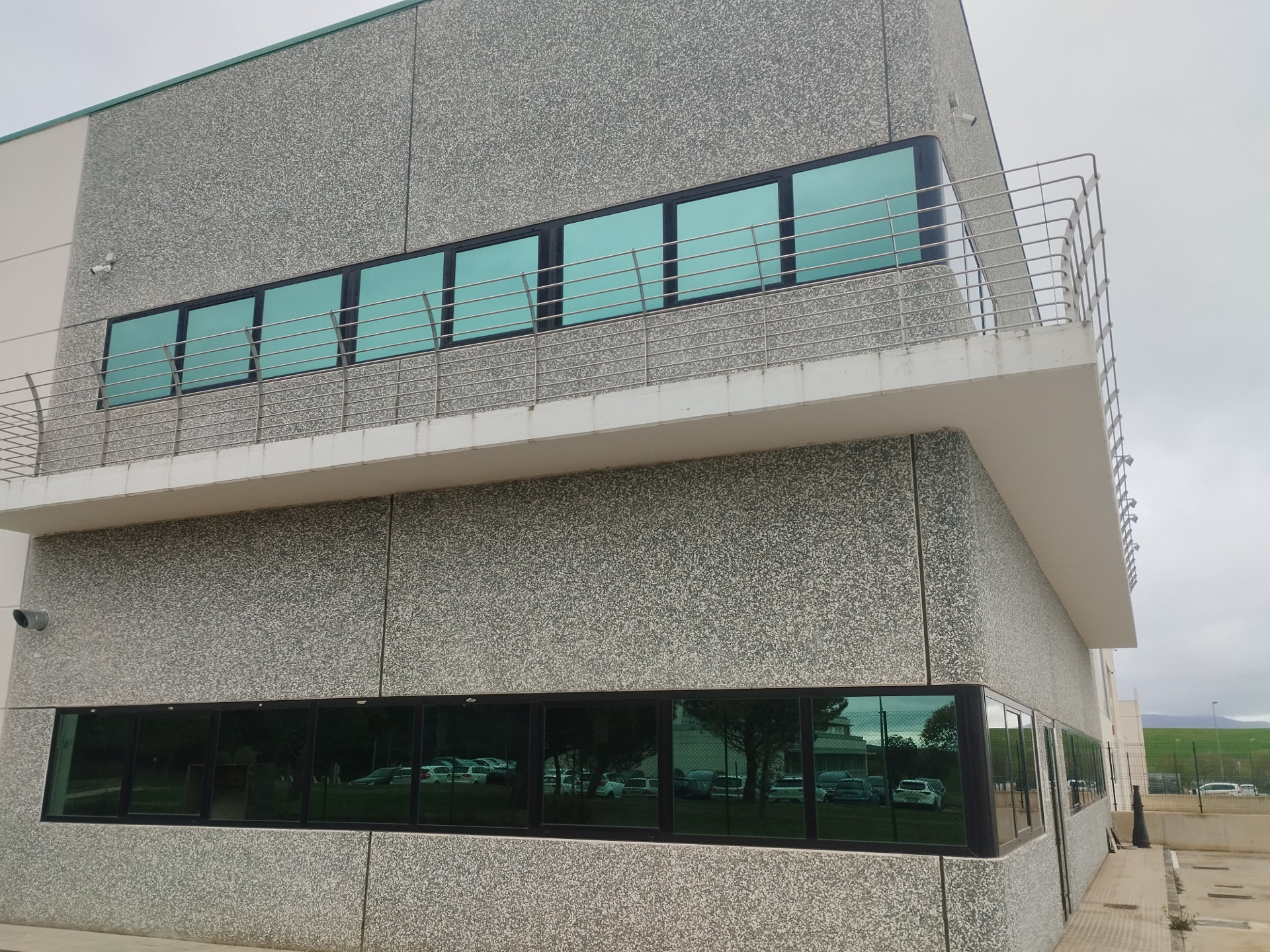
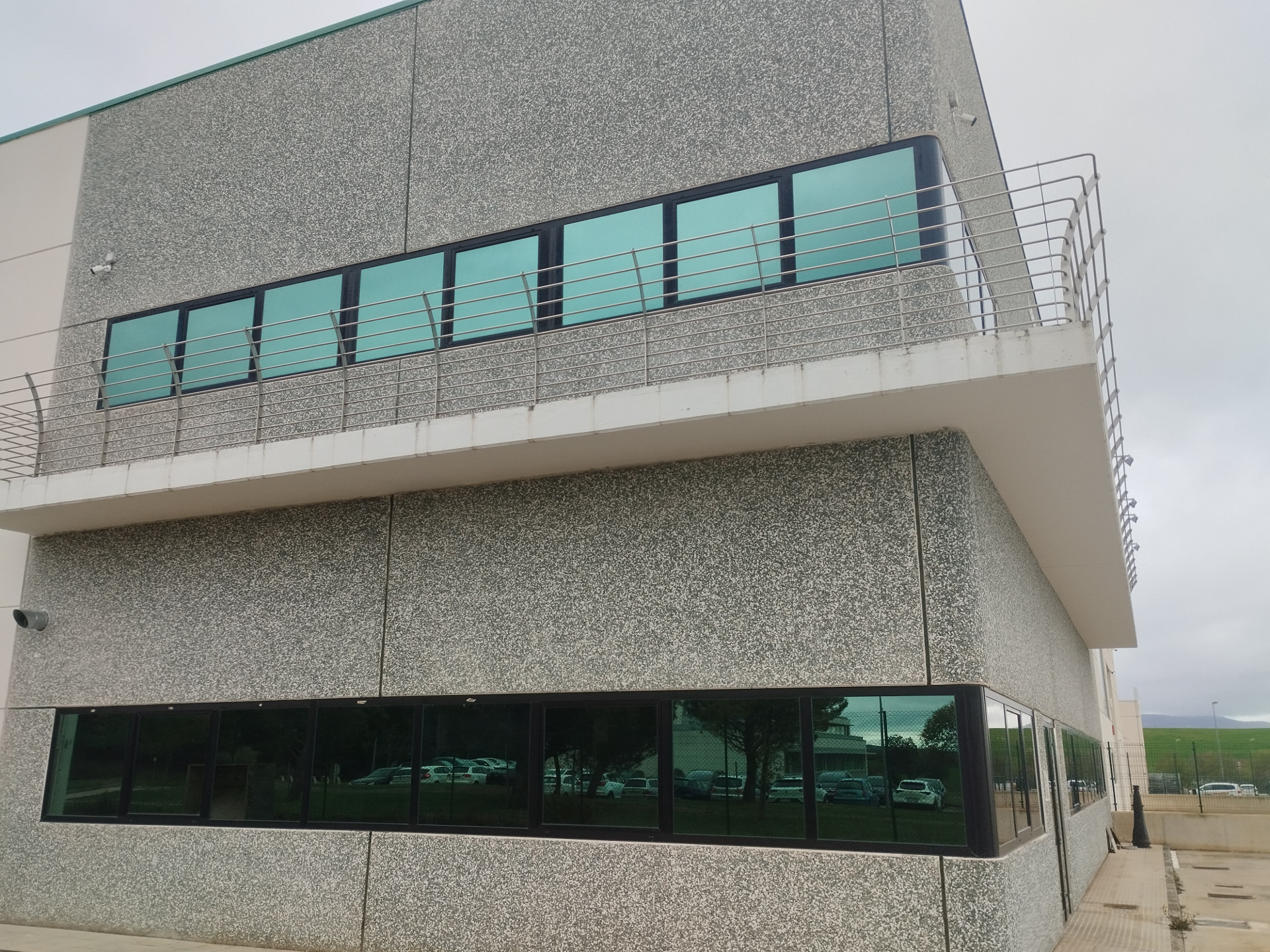
Office building before renovation, May 2025.
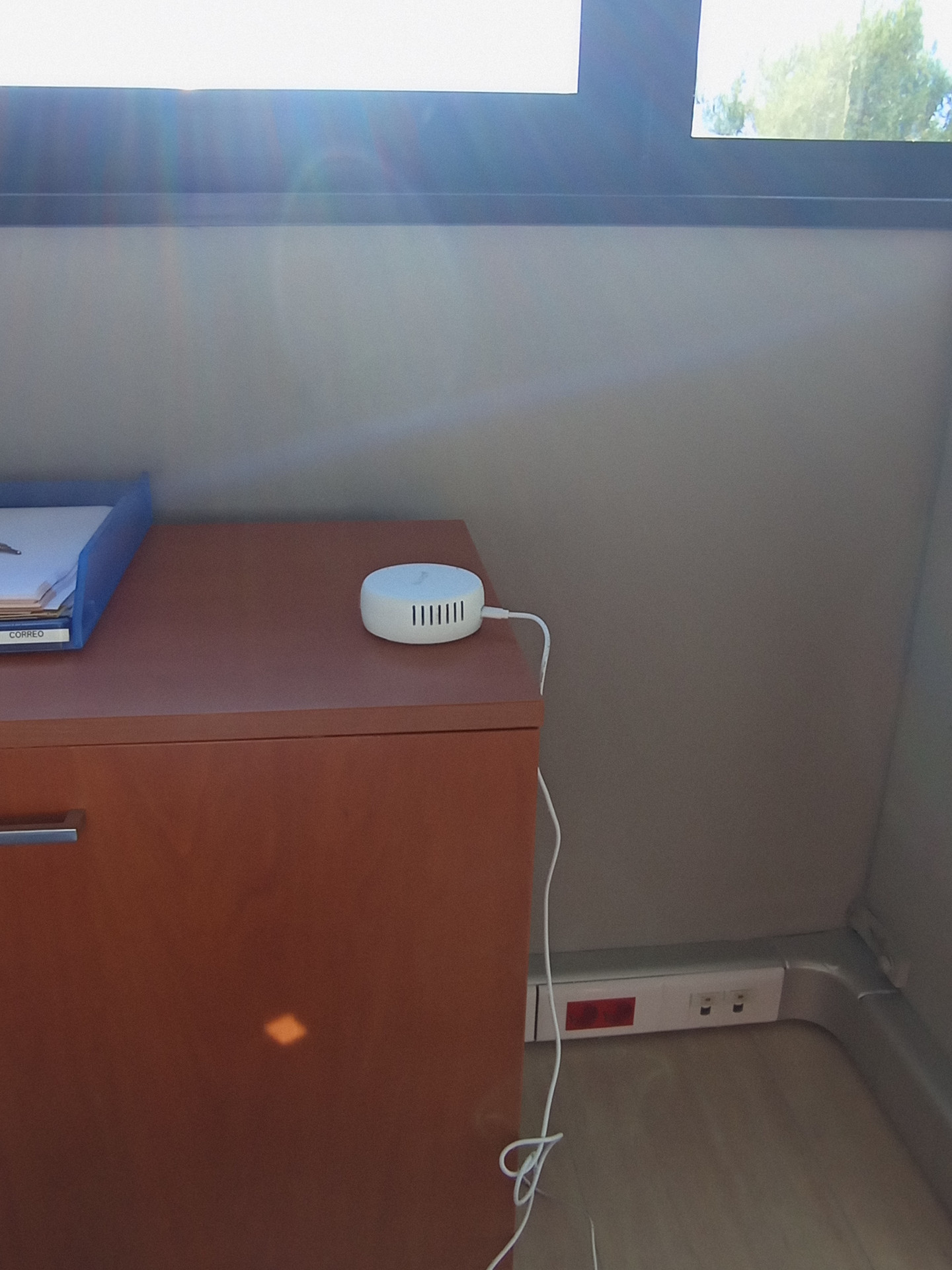
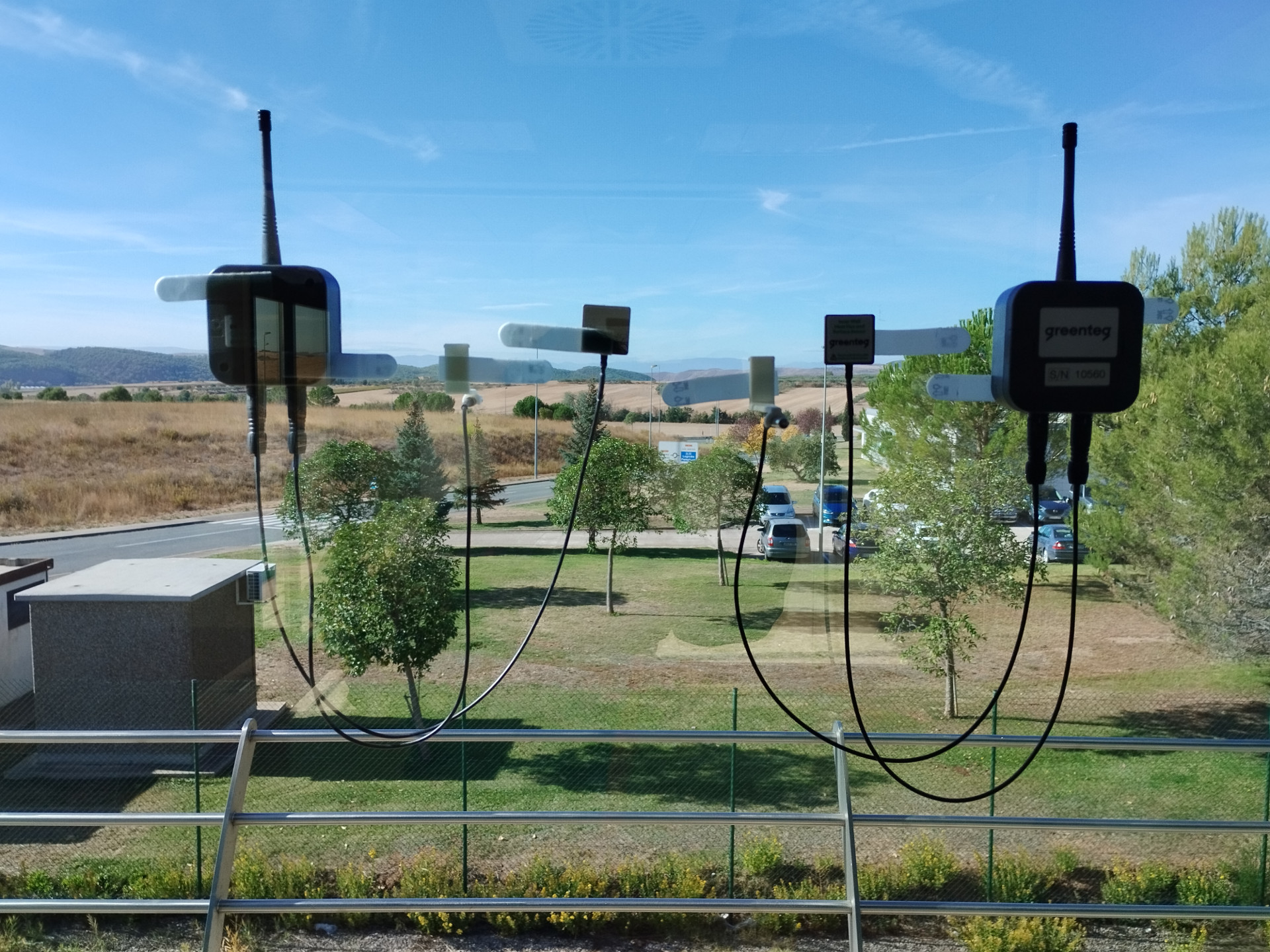
Monitoring units installed in October 2025.
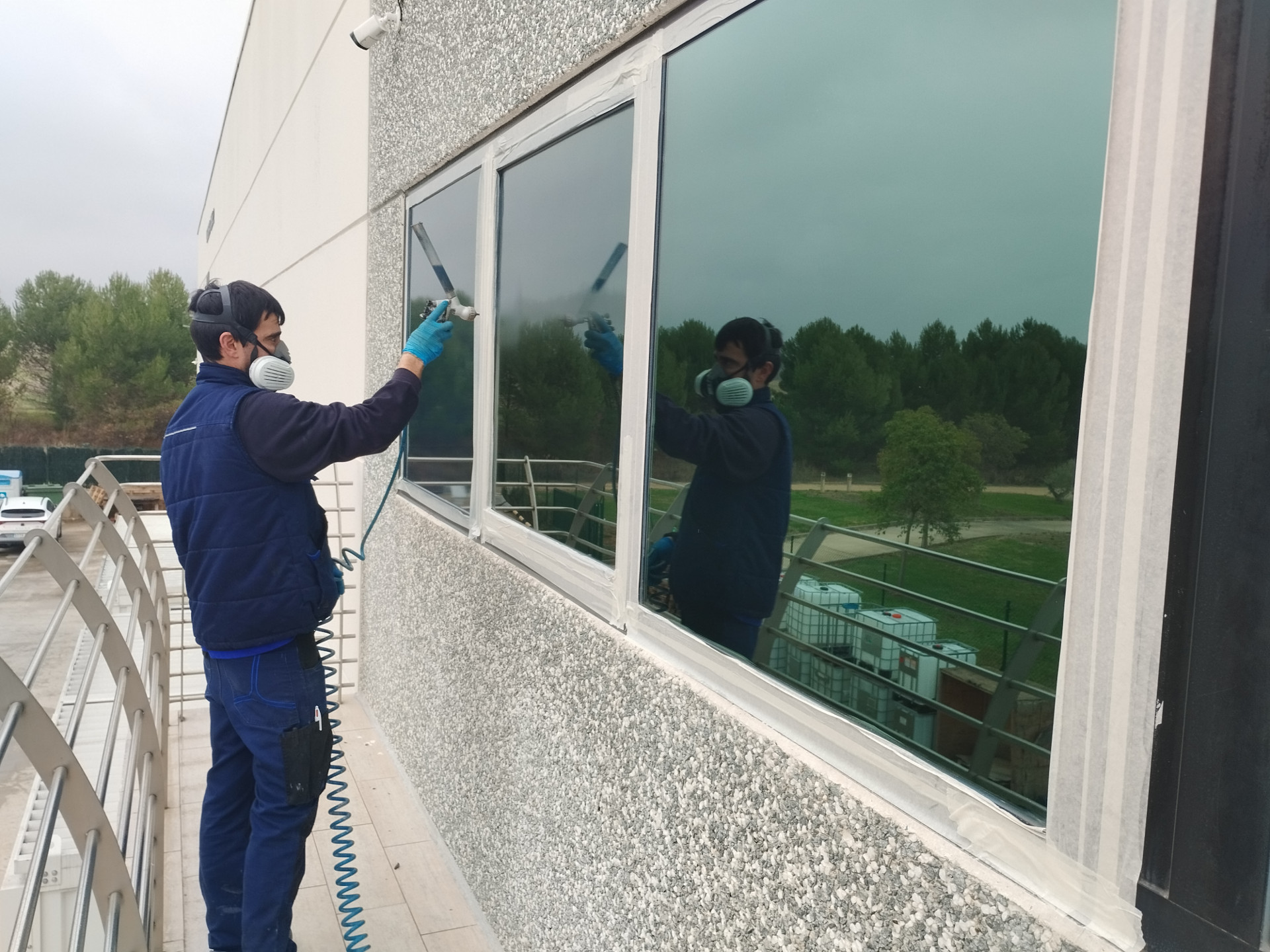
Coating application in November 2025.
Results
- The heating-season measurements show relatively stable indoor temperatures and limited sensitivity to outdoor temperature fluctuations. This is broadly consistent with the heating-season questionnaires, in which neither respondent identified a specific thermal issue and both reported neutral-to-positive thermal satisfaction.
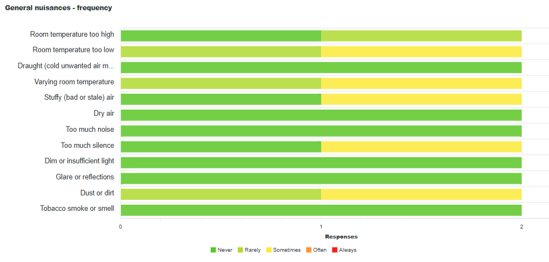
- The cooling-season POE was also generally favorable, although thermal conditions received the highest severity ranking. Occasional reports of high or low room temperature, draughts and temperature variation suggest that thermal conditions were not uniform for every respondent.
- The heating-season monitoring recorded substantial but temporary PM10 and PM2.5 events in individual spaces before and after the retrofit. In contrast, the POE prevalence panels did not identify a recurring air-quality issue.
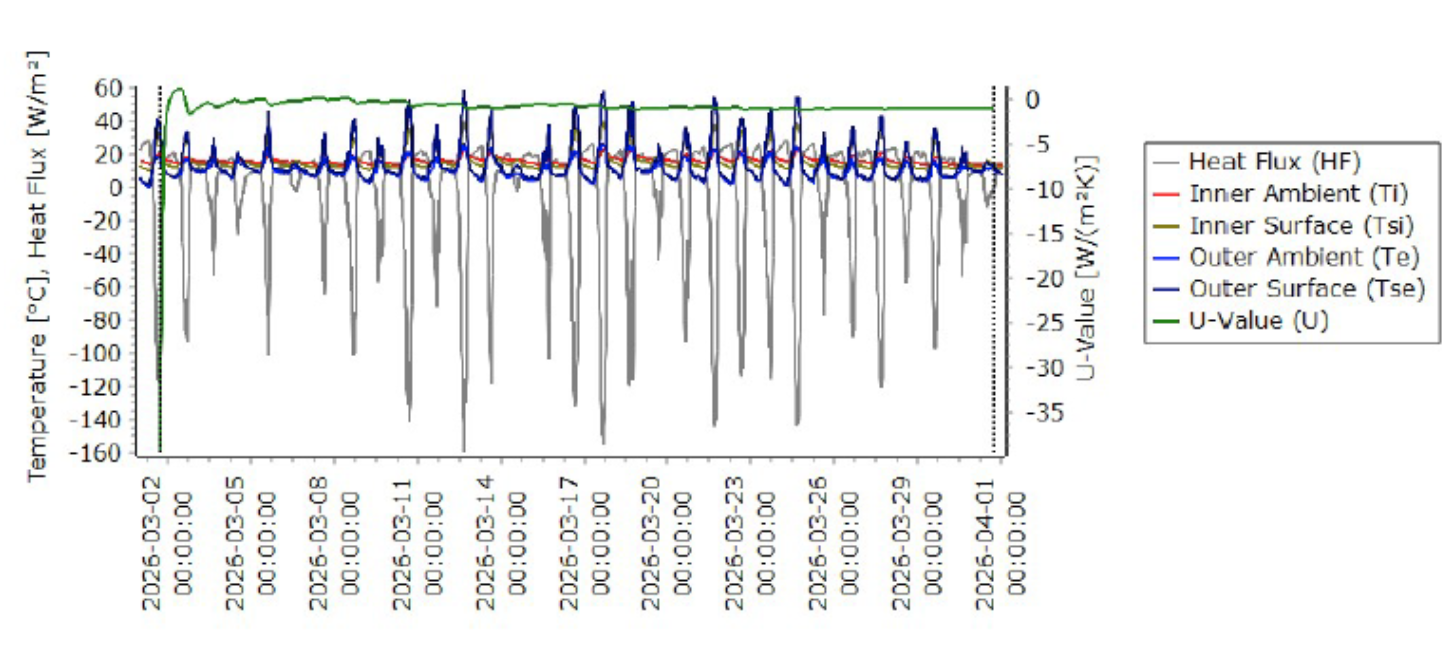
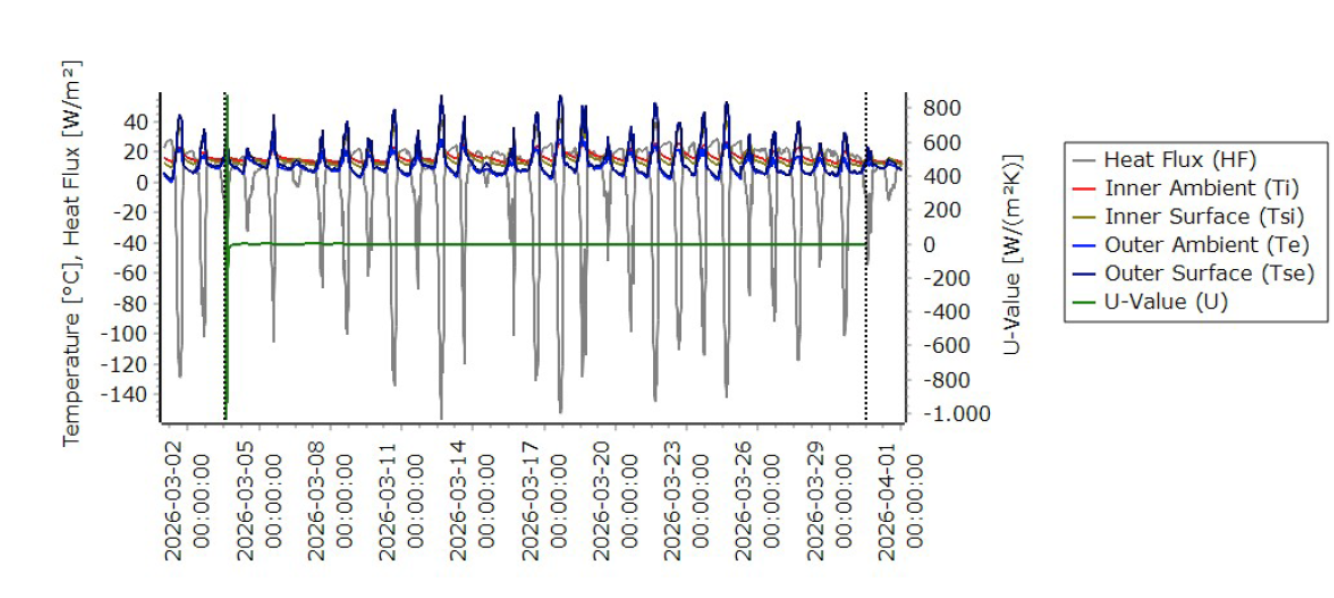
- The U-value result shows that the coating does not act as a conventional thermal insulator, but rather as an element that selectively manages the radiative balance, capable of minimizing solar heat gain in summer while, at the same time, reducing thermal losses in winter. Taken together, these results support the conclusion that the coating evaluated performs a bidirectional thermal regulation function, whose impact is especially relevant during periods of greatest solar exposure, where it translates into a tangible improvement in indoor thermal comfort and, foreseeably, into a reduction in the energy consumption associated with climate control of the space.